Garage Door Broken Spring Calls: Same-Day Dispatch in 2026
The spring call is won on the phone and in the truck, long before the tech reaches the driveway.
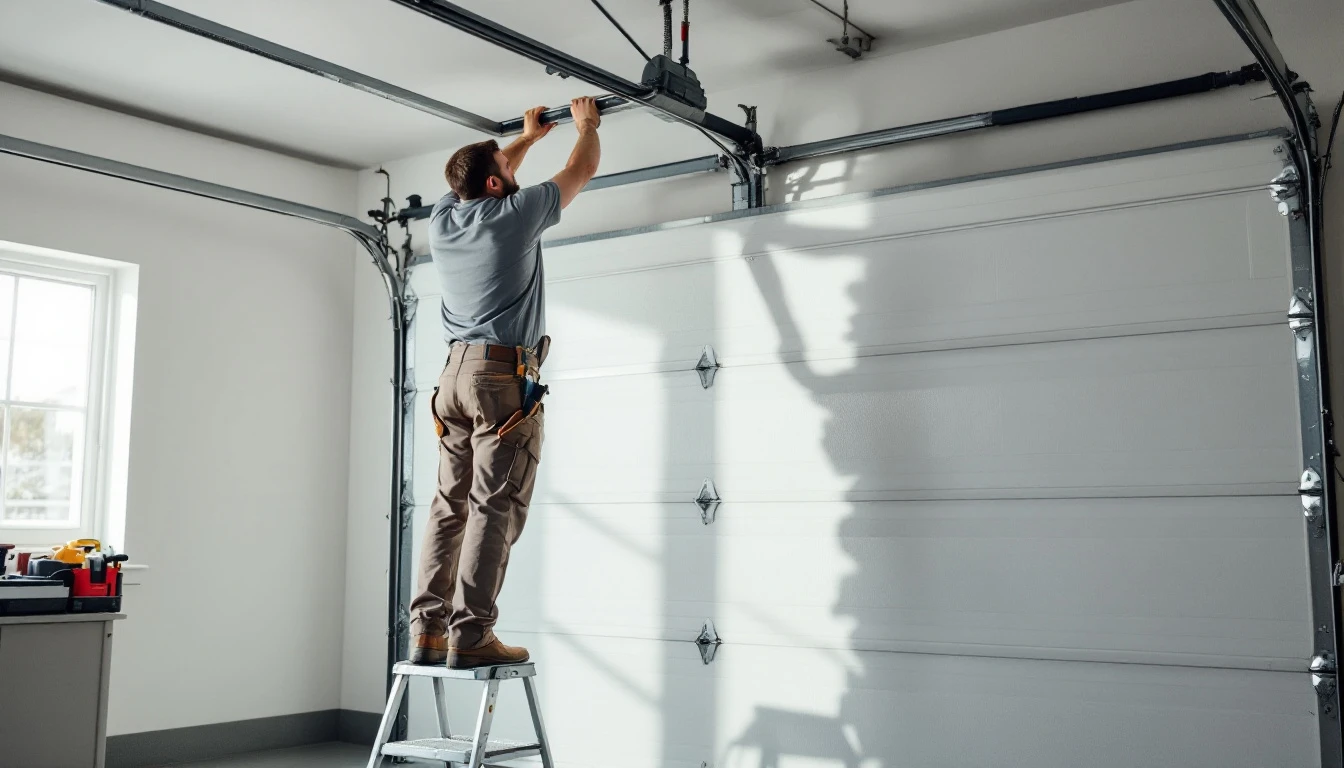
TL;DR
A broken spring is the bread-and-butter urgent call for a garage door company. The door will not lift, the car is often trapped, and the customer is calling three companies in a row. As of October 2026, the shops that win these calls are not the ones with the lowest price. They are the ones that answer first, ask the right five questions, give a real arrival window, and show up with the right springs on the truck.
This is a same-day dispatch playbook for broken-spring calls: how to qualify the call in under two minutes, how to hold room in the schedule without leaving techs idle, what to stock so the job closes in one visit, and how to communicate so the customer stops calling competitors. It is written for garage door companies with one to ten technicians.
Why the spring call is different from other garage door work
Most garage door work can wait. A noisy opener, a tune-up, a new door quote, a weather seal. Customers book those a few days out and nobody is upset.
A broken spring is different for three reasons.
The customer is stuck. A car trapped in the garage means a missed shift or a missed school run. A door stuck open means the house is not secure overnight.
The customer is shopping by speed. They are not comparing brands of spring. They are asking one question: who can come today.
The job is predictable. Unlike a diagnostic call, a spring replacement has a known scope and a known duration once you know the door. That makes it one of the few urgent jobs you can quote, block, and stock for with confidence.
That combination, urgent for the customer and predictable for you, is why this call deserves its own process rather than being squeezed into the general queue.
Qualify the call in under two minutes
The intake conversation decides everything downstream: how urgent the job is, which springs to load, and how long to block. Five questions cover it.
- Is a vehicle trapped inside? This is the urgency question. A trapped car moves the job to the front of the line.
- Is the door stuck open or closed? Stuck open is a security problem and matters most late in the day.
- Single or double door, and roughly how tall? A standard single, a standard double, or an oversized door each point to different springs.
- One spring or two above the door? Customers can usually see this from inside the garage. It tells you what is installed now.
- Anything else visibly damaged? A cable hanging loose, a bent top panel, or a door that dropped unevenly changes the scope and the time.
Add one safety line to the script every time: ask the customer not to try to lift the door or run the opener. A door with a broken spring is far heavier than it looks, and an opener straining against it can damage itself.
Put these five answers in the job notes exactly as given. If you take bookings online, the same questions belong on the booking form. GetTimePad's online booking portal supports intake forms that collect service details and photos, and a photo of the spring assembly from the customer removes most of the guesswork before the truck rolls.
Give a real window, then keep it
The customer who hears "sometime this afternoon" keeps calling other companies. The customer who hears "between one and three, and you will get a text when the tech is on the way" stops.
Two rules make the promise credible.
Quote a window you can keep. A two-hour window that you hit beats a one-hour window that you miss. Our guide to arrival time windows covers how to size them.
Confirm in writing immediately. A confirmation text with the window, sent while the customer is still on the phone, is what ends the shopping. With automated reminders the confirmation goes out the moment the job is booked, and the en-route notification follows when the tech starts driving.
Hold same-day capacity without wasting it
The hardest part of same-day service is not the dispatch. It is having somewhere to put the job. A schedule booked solid with tune-ups and quotes has no room for the call that pays best.
The fix is deliberate holds. Block a small amount of time each day that only urgent work can claim, and release it on a cutoff if nothing arrives.
| Team size | Suggested daily holds | Release cutoff | What fills a released hold |
|---|---|---|---|
| 1 technician | One 90-minute block, early afternoon | 11:00 AM | Next-day tune-up moved up, or a quote visit |
| 2 to 3 technicians | One late-morning and one mid-afternoon block | 10:00 AM and 1:00 PM | Waitlisted routine jobs nearby |
| 4 to 6 technicians | Two blocks per shift, split across areas | 10:00 AM and 1:00 PM | Waitlisted jobs, callbacks, warranty checks |
| 7 or more technicians | One dedicated urgent-response tech plus one floating block | Rolling, reviewed hourly | Overflow from the routine queue |
Treat these as starting points and adjust to your own call history. If your holds are claimed by ten every morning, you need more of them. If they are released unused most days, you need fewer.
In GetTimePad, a hold is simply a blocked slot on the tech's calendar with a clear label. The scheduling calendar's color-coded job types make the holds obvious on the board, and conflict detection warns the office before anyone books routine work over one by accident. The broader logic of mixing urgent and planned work is covered in emergency vs scheduled jobs: dispatch triage.
Send the closest tech, not the next one on the list
When a spring call comes in, the right tech is usually the one who can get there soonest with the right stock, not the one whose turn it is.
That decision needs a live picture of where everyone is. On the Pro plan, the dispatch board shows technicians on a live map, and jobs can be dragged onto whoever is closest. If the vans carry the optional hardware tracker, GPS tracking shows vehicle positions even when a tech has not touched the phone in an hour.
Two practical checks before assigning:
- Is the closest tech actually close to finishing? A tech five minutes away but one hour into a three-hour install is not available.
- Does that truck have the springs? Proximity means nothing if the right stock is on a different van. That brings us to the truck.
Stock the truck so the job closes in one visit
A spring call that needs a second trip is no longer a good job. The customer waits another day, the tech drives twice, and the review you were about to earn is gone.
One-visit completion is a stocking problem. The principles:
- Carry the common sizes in pairs. Enough to replace both springs on the door sizes you see most.
- Carry the related parts. Cables, drums, bearings, and rollers are the usual companions to a spring failure.
- Restock from the day's record. A tech who uses the last pair of a common spring and does not log it has set up tomorrow's failed visit.
Parts used should be noted on the job before the tech leaves the driveway. In Tech Mode, job notes and photos are added from the phone, so the office sees what was used the same afternoon. Our piece on job readiness and parts before dispatch goes deeper on tying stock to the next day's schedule.
Turn the urgent visit into a complete one
The customer called about a spring. While the tech is there, the door gets a quick overall check: cables, rollers, hinges, opener force, safety sensors. Not as a sales trick, but because a door that just broke a spring has usually been wearing everywhere else too.
Keep it honest and simple:
- Show, do not tell. A photo of a frayed cable attached to the job record is more persuasive and more defensible than a verbal warning.
- Offer, do not push. If the customer declines extra work, note it. That note protects you if the cable fails next month.
- Collect payment before leaving. Card payment on site through payments means the job is closed, not waiting on an invoice.
For why the photo habit matters beyond upsells, see job photos and documentation for disputes.
The after-hours problem
Springs do not break on a schedule. Plenty fail in the evening when someone comes home, or first thing in the morning when someone tries to leave.
You have three options for those calls, and the wrong one is voicemail.
- An on-call rotation. One tech takes urgent calls each evening. This works, but it needs fair rules. Our guide to after-hours on-call scheduling covers how to set it up.
- Book the first slot of the morning. Many customers are satisfied with a guaranteed 7:30 arrival if it is confirmed tonight.
- Let an AI receptionist answer. GetTimePad's AI receptionist, included at Pro, answers around the clock, asks the qualifying questions, and books the appointment into the calendar.
Whichever you choose, the call must be answered and the customer must end it with a confirmed time.
Measure whether it is working
Three numbers tell you if the spring process is healthy.
- Same-day completion rate. Of spring calls received before your cutoff, how many were completed that day?
- One-visit completion rate. How many needed a return trip, and why? Missing stock is the usual answer.
- Hold utilization. How often were holds claimed versus released?
Review them monthly. The reporting view gives you job counts and outcomes to work from, and the U.S. Bureau of Labor Statistics Occupational Outlook Handbook is a useful neutral reference if you are planning headcount around demand in the trade.
If you are still comparing tools, the garage door software page shows how the pieces fit for this trade, and pricing lists what each plan includes.
Frequently asked questions
How fast should a garage door company respond to a broken spring call?
Same day is the standard customers expect for a broken spring, because the car is usually trapped inside or the door will not secure. A realistic target is an arrival window within a few hours for calls taken before early afternoon, and first slot next morning for calls taken late in the day.
What should the office ask when a customer reports a broken spring?
Ask five things: is a car trapped inside, is the door stuck open or closed, is it a single or double door and roughly how tall, are there one or two springs above the door, and is anything else visibly damaged such as a cable or a bent panel. Those answers decide urgency, the springs to load, and how long to block.
How do you keep same-day room in the schedule for spring calls?
Hold a small number of open blocks each day instead of booking every tech solid. One late-morning and one mid-afternoon hold per two technicians is a common starting point, released to routine work if no urgent call has claimed them by a set cutoff time.
How much does GetTimePad cost for a garage door company?
GetTimePad is $79/mo Starter for one staff member, $199/mo Pro for up to five staff, and $499/mo Agency for unlimited staff. Live GPS tracking, Tech Mode, Stripe payments, two-way SMS, and the AI receptionist land at Pro. Annual billing gives you two months free. See /pricing.
Should a garage door company replace one spring or both?
That is a technical and pricing decision for the business, but from a scheduling point of view the truck should always carry enough stock to replace both springs on the common door sizes. A second trip for the matching spring turns a profitable same-day job into two visits.
How do you stop losing spring calls after hours?
Answer the call. A caller with a trapped car will dial the next company within a minute of reaching voicemail. Either staff an on-call rotation or use an AI receptionist that can answer, capture the door details, and book the first slot of the morning.
Related articles
Garage Door Service Software: The 2026 Buyer's Guide
2026 guide to garage door service software: emergency dispatch, GPS ETAs, quote-to-job, parts deposits, reminders, AI receptionist, and reviews.
Read article →

Mobile Auto Glass Scheduling Software: The 2026 Guide
2026 guide to mobile auto glass scheduling software: VIN and glass part capture at booking, cure-time windows, ADAS recalibration, and same-day routing.
Read article →

Mobile RV Repair Scheduling Software: The 2026 Guide
2026 guide to mobile RV repair scheduling software: campground access windows, long drive times, parts-hold jobs, and seasonal demand swings.
Read article →
Ready to try GetTimePad?
Live demo available. No signup required. Set up in under 5 minutes.
Try Live Demo