Customer Not Home — Trip Charge Policy for 2026
Nobody answered the door. Now you decide whether to charge for the drive and whether you still want the customer.

TL;DR
The tech drove out, knocked, called, texted, waited fifteen minutes, and nobody answered. As of September 2026 that empty driveway is one of the most expensive routine events in field service, because it burns roughly an hour of a technician's day plus fuel and a calendar slot that could have held a paying job. Unlike a parts delay, you have nothing to invoice at the end of it.
This is the full build on a customer not home trip charge policy: the prevention stack, the wait-time rule and how to log it, what the fee should be and where it has to be disclosed, how to tell a genuine miss from a pattern customer, the documentation that settles a dispute, when to waive the charge, and the rebooking script. No legal advice here on whether a fee is enforceable where you operate, which is a question for your attorney. What this covers is the operational side, where disclosure and written acknowledgement are what make a fee defensible in practice.
What the empty driveway actually costs
Run the number for your own shop before you set the policy, because it changes the decision. Round-trip drive time, plus the fifteen minutes at the door, plus staging at either end lands near an hour of a technician's paid day for most residential operations. Add fuel and vehicle wear, then add the real cost, which is opportunity cost: that slot was capacity. If your techs run five to six jobs a day, you just lost roughly a fifth of one truck's revenue, and you cannot get it back because the day is over.
A trip charge is therefore not a punishment and not a profit center. It is partial recovery on a loss, and it exists mainly to change behavior, so the reminder gets read and the appointment gets moved instead of ignored.
Prevention first, because the fee is the consolation prize
Every dollar you collect in trip charges arrives with a wasted trip attached. The policy matters, but the prevention stack matters more, and it is four layers deep.
Confirm the window at booking. Not "Tuesday" but a real window the customer agreed to, delivered back in writing immediately. A large share of not-home misses are a customer who remembered a different day, and a written confirmation at the moment of booking kills that whole category. Our post on arrival time windows covers setting one you can actually hit.
Remind about 24 hours out. This is your primary defense and it is almost entirely automated. A day-before reminder gives the customer enough runway to move the appointment rather than miss it, which is the outcome you want, because a reschedule is not a loss. It is a job on a different day. Automated SMS and email reminders are included from the $79/mo Starter plan up, and the broader treatment is in reduce no-shows for your service business.
Text en route with a real ETA. The strongest single lever, because it lands in the twenty minutes when the customer can still act — it gets somebody to leave a meeting, come home, or unlock the gate. GPS-and-traffic-based ETAs at the Pro tier make that number honest instead of a guess, and that matters: a customer told twenty minutes who waited ninety stops trusting the next en-route text.
Make it two-way. A reminder the customer cannot answer is a broadcast. Most people who miss an appointment did not decide to ghost you, they got stuck at work with no low-friction way to say so. If replying "running late, can you come at 4?" is possible, a large share of would-be no-shows turn into small schedule adjustments. Mechanics are in the two-way texting playbook, and the inbound half, the customer who called while your line was busy and gave up, is in missed-call text-back.
Run all four and what remains is the population your policy is actually for.
The wait-time rule
Pick one number and put it in writing. Ten to fifteen minutes is the common range for residential work, and the exact figure matters far less than every tech using the same one.
A fixed rule does three things. It stops the tech negotiating with themselves in the driveway, which is how one tech waits four minutes and another waits forty. It makes your records consistent. And it protects the rest of the day, because a tech improvising a forty-minute wait is now late to three customers who did nothing wrong.
The sequence during the wait should be scripted, not improvised:
- Arrive and log it. Arrival time goes on the job, one tap in Tech Mode on the phone.
- Knock, then call the number on the job once, leaving a voicemail if it goes there.
- Text the customer from the job. This is the important one, because an outbound message creates a timestamped record the customer received.
- Photograph the door or the equipment, timestamped.
- Wait out the clock, then leave and close the job as no-access.
That text is not optional. A phone call leaves a record on your side only. A text leaves one on both sides, and "we texted you at 2:14 and again at 2:21" is a very different conversation from "we tried to reach you."
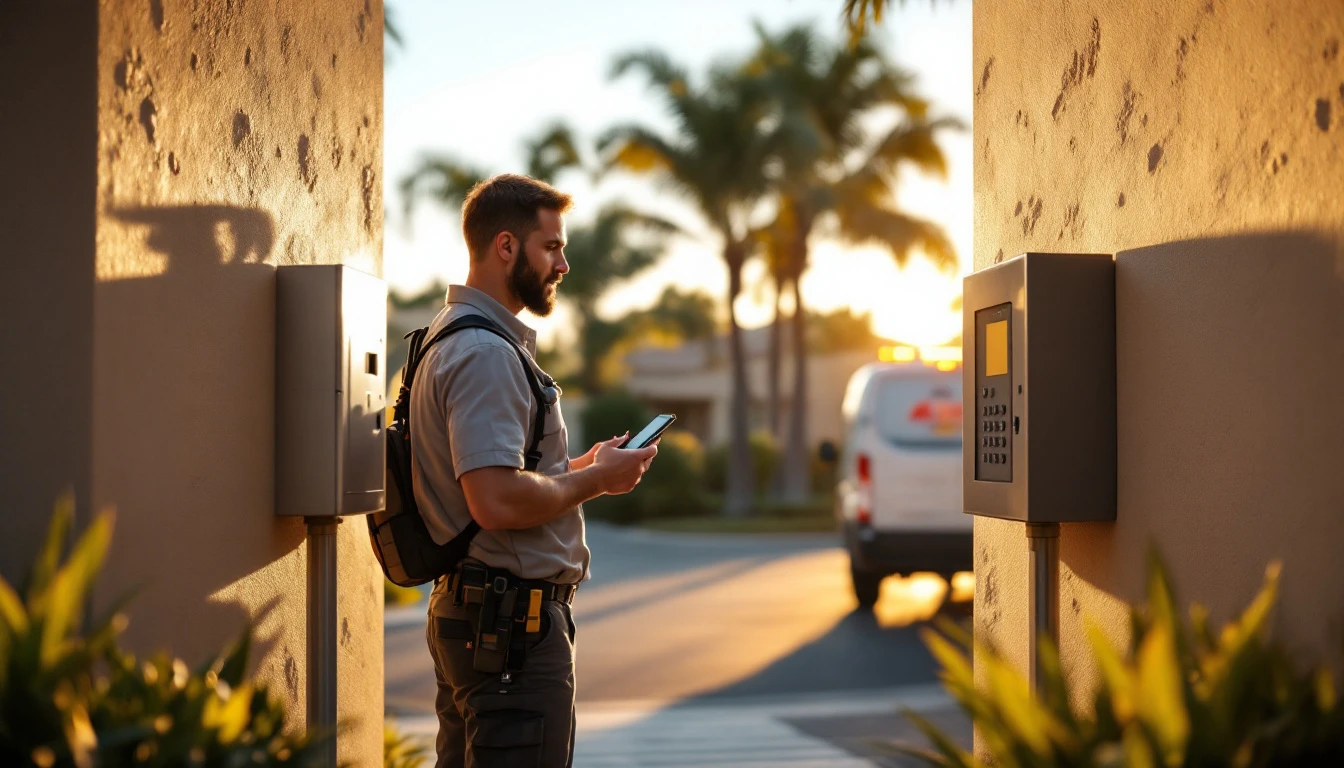
A customer who is not home is not the same as a customer whose gate code changed. Both read as a failed trip and need different fixes — access is an intake problem, solved earlier in property access and gate-code job notes.
What to charge, and where it has to be disclosed
The fee should roughly cover the drive and the slot, not punish. Most shops land between a fraction of their minimum service call and the full diagnostic fee. Set it against your own numbers, then leave it alone, because a fee you change per customer is a fee you cannot defend.
Where it is disclosed matters more than what it is. A trip charge that first appears on an invoice is an argument you will usually lose, and losing it costs more than the fee. A trip charge stated in four places before the appointment is a policy. Put it:
- On the booking page, in plain language next to the time picker, not buried in a terms link nobody opens.
- In the confirmation message, one short line: if nobody is home we charge a trip fee of X, reply to reschedule any time before your window.
- In the 24-hour reminder, same line, shorter.
- Behind a policy link that states the number, the wait time, and how to cancel without a charge.
An explicit acknowledgement — a checkbox at booking, or the customer's own reply confirming the appointment — puts you in a materially stronger position with both the customer and a card processor. That is the practical standard: disclosed before, acknowledged in writing, documented after. For general consumer-disclosure guidance the FTC's business guidance is the right starting point, and your state's rules are a question for your attorney.
The four policy options
The right policy depends on ticket size, how emergency-weighted your work is, and how much booking friction your lead flow can absorb.
| Policy | Customer agrees to | What it recovers | Booking friction | Best fit |
|---|---|---|---|---|
| No charge | Nothing | Nothing | None | Low-ticket, high-volume, repeat-heavy work where goodwill beats recovery |
| Trip fee billed after | A stated fee if nobody is home | Part of the drive, only if they pay | Low | Established shops with good customer records and documentation |
| Refundable deposit at booking | Card on file, deposit applied to the job | Most of the loss, collected up front | Moderate | Higher-ticket jobs, new customers, first-time bookings |
| Prepay in full | Payment before the visit | All of it | High | Diagnostics, repeat offenders, out-of-area trips, some emergency work |
Most operations run a blend: no charge for long-standing accounts, a disclosed trip fee as the default, a deposit for new customers or big-ticket work, and prepay for anyone who has already missed twice. Deposits are the strongest of the four and the one shops underuse for fear it kills bookings — usually it does not, and the argument is in appointment deposits that reduce no-shows. Stripe payments and deposits sit at the $199/mo Pro tier; see pricing.
Genuine miss versus pattern customer
Treat these as two different situations, because they are.
A genuine miss looks like this: a customer with a clean history, one missed appointment, and an apologetic reply within a few hours. They had an emergency, a meeting ran, a kid got sick. The right move is almost always to waive the fee explicitly and rebook while you have their attention. You spend the fee to keep the relationship, and with someone who has paid you three times already that is a trade you win.
A pattern customer looks different: two or three misses, no replies to reminders, a history of rescheduling late. This person is not a bad human, they are an unreliable slot, and every appointment they book costs you capacity. After the second miss, move them to a card-on-file deposit or prepay and say so plainly. After a third, it is reasonable to stop booking them.
You cannot tell these apart from memory past a few hundred customers, which is the reason to track it. Cancellation and no-show tracking is included from the Starter plan up, and the same instinct applies to late cancellations, with the framework in cancellation and rescheduling policy.
Documentation is the whole ballgame
When a customer disputes the charge, and some will, the argument is decided entirely by what you can show.
The record that wins has three parts. A timestamped photo at the door or the equipment, taken before the tech leaves. Arrival and departure times logged on the job, matching your stated wait-time rule. An outbound message sent from the job during the wait, proving the customer was contacted at a specific minute.
Photos are the part shops skip and later regret. A tech photographing a closed door is creating evidence for a conversation that happens weeks later. The habit is in job photos and documentation for disputes.
All of it should live on the job, not in someone's camera roll. That is the reason to keep notes, photos, times, and messages on one customer record in your scheduling system — a dispute you can answer in thirty seconds is a dispute that ends.
The rebooking script
The message after a missed visit is where you either recover the job or lose the customer. Keep it short, keep the blame out, and lead with the reschedule rather than the fee. Something close to this:
"Hi Marcus, our tech was at the house at 2:15 today and nobody answered, so we had to head out. No problem, want to get you back on the schedule? I have tomorrow between 10 and 12, or Thursday afternoon. Our policy does include a trip fee for a missed visit, but since this is the first time I'll waive it. Just reply with the time that works."
Three things are doing work there. The specific time and action establish the record without accusation. Two concrete slots make replying easy, because an open-ended "when works for you?" gets ignored. And naming the fee while waiving it teaches the policy without spending the relationship.
If they miss again, the same script runs with the fee applied and a card required to rebook. That escalation is the point: the decision is already made, so nobody in your office has to invent one under pressure.
Frequently asked questions
Can I charge a trip fee when the customer is not home?
In practice a trip charge holds up when the customer was told about it before the appointment and you can show they were told — on the booking page, in the confirmation, and ideally acknowledged with a checkbox or a reply. Disclosure plus documentation is what makes the fee defensible with a customer or a card processor. See https://www.ftc.gov/business-guidance for general consumer-disclosure guidance and ask your own attorney about your state.
How long should a technician wait before leaving a no-access job?
Pick one number, write it down, and make every tech follow it — ten to fifteen minutes is the common range for residential work. A fixed rule keeps the tech out of a driveway negotiation, makes your timestamps consistent, and gives a disputed charge the same story every time.
How much does GetTimePad cost?
GetTimePad is $79/mo Starter for one staff member, $199/mo Pro for up to five staff, and $499/mo Agency for unlimited staff with API access. Automated SMS and email reminders plus cancellation tracking are included from Starter up, while Stripe payments and deposits, two-way SMS, and GPS-based ETAs land at Pro. Annual billing gives you two months free. See pricing.
What is the best way to prevent not-home no-shows?
Stack four things rather than relying on one — a confirmed time window at booking, a reminder about 24 hours out, an en-route text with a real ETA, and two-way texting so the customer can say they are running late instead of going silent. Most misses are a collision the customer never got a chance to mention. Details at reduce no-shows.
Should I ever waive the trip charge?
Yes, for a good customer with a genuine first-time miss. Waive it once, say so explicitly, and rebook on the spot, because the waiver buys the next three jobs from someone who already pays you. Charge the fee when the pattern repeats, and move a third-time misser to prepay.
How do I document a not-home visit in case the customer disputes the charge?
Capture a timestamped photo at the door or the equipment, log arrival and departure times, and send the customer a message from the job before the tech leaves so the notification itself is time-stamped. A photo, the times, and a message they received is what settles a dispute. Photo workflow is at job photos and documentation.
Related articles

Writing a Cancellation and Rescheduling Policy Customers Accept in 2026
2026 guide to a cancellation and rescheduling policy customers accept: notice brackets, where to show it, and enforcing it without losing goodwill.
Read article →

Arrival Time Windows: How Wide to Promise and How to Keep Them in 2026
2026 guide to arrival windows: choosing a width you can resource, why late slots need wider windows, and measuring compliance from real timestamps.
Read article →
Property Access Notes for Field Service Software in 2026
2026 playbook for property access notes in field service software — gate codes, call boxes, locked side gates, and notes the next tech can read.
Read article →
Ready to try GetTimePad?
Live demo available. No signup required. Set up in under 5 minutes.
Try Live Demo